

Think You’re Too Smart to Get Scammed? Think Again.
Even the most tech-savvy, degree-holding, scam-aware individuals can fall for a well-crafted lie. A recent commentary by CNA’s Darrelle Ng details how a sophisticated phone scam nearly reeled her in—despite her having every reason to know better.
It’s a must-read because it highlights how modern scams exploit psychology, information overload, and false urgency—not just technology.
Let’s break down how you can protect yourself and your loved ones from becoming the next victim of a phone scam, using Darrelle’s experience as a live case study.
📞 What Happened: The Anatomy of a Real Scam Call
Darrelle received a call from a local number claiming to be from HSBC’s anti-fraud department. The scammer:
-
Spoke with a local accent
-
Knew her NRIC number and full name
-
Referred to a fake credit card application via Singpass
-
Quoted a real HSBC address
-
Transferred her to a fake “MAS officer” on the same call
It felt real—because it was engineered to.
But she noticed cracks:
-
The call came from a mobile phone, not a landline
-
There was static on the line, unusual for a corporate call
-
Too much unsolicited information was provided, fast
-
It felt urgent and overwhelming
She hung up just in time.
🔐 What You Can Learn: How to Defend Yourself
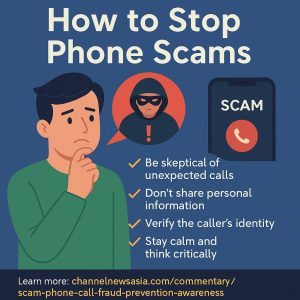
🛑 1. Know the Golden Rule: Legitimate Institutions Don’t Call You to Panic You
Banks and government agencies:
-
Never ask for sensitive details like your PIN, OTP, or card number over the phone
-
Do not threaten you with arrest or legal action
-
Do not transfer your call to other agencies like MAS or SPF
If someone does this—hang up and call the agency directly using numbers from their official website.
📲 2. Don’t Trust the Caller ID
Scammers can spoof local numbers to look legitimate.
✅ Use caller ID protection apps like Hiya or Truecaller
✅ Save the official bank hotlines in your phone
✅ When in doubt, Google the number or ask a trusted friend
🤯 3. Be Wary of “Too Much Info”
In the CNA article, the scammer knew Darrelle’s NRIC and full name. Scary, right?
But that’s the thing—personal data leaks are common today. If a scammer starts with your details, it’s not proof they’re legit. It’s bait.
🧠 Tip: The more someone “proves” they know you, the more suspicious you should become.
🐟 4. Don’t Let Them Rush You
Scammers use urgency to bypass your logic. They’ll say:
“Your account is compromised!”
“This is time-sensitive. You must act now!”
“The police are involved. You’ll get arrested.”
These are all classic signs of a phishing call.
🌬️ Breathe. Slow down. Hang up and verify independently.
📵 5. Silence Unknown Callers
On iPhone:
Settings → Phone → Silence Unknown Callers
On Android:
Use Google Phone App → Settings → Caller ID & Spam → Filter spam calls
This prevents shady numbers from even ringing your phone.
🧠 6. Practice Scam Drills (Seriously)
Train yourself like it’s muscle memory.
💡 What will you do when:
-
A stranger asks for your NRIC?
-
Someone says your Singpass was used to commit fraud?
-
You get a call claiming to be from MAS?
Make a habit of saying:
“Thanks, I’ll call the bank directly myself.” [Hang up]
🔎 7. Know Where to Report
If you receive a suspicious call:
-
Report it immediately to the Anti-Scam Helpline at 1800-722-6688
-
Visit www.scamalert.sg to learn about trending scams
-
Report scam messages and numbers via WhatsApp to +65 8758 2435
🧩 Real People Are Falling for It — You’re Not Alone
As Darrelle reflected in her CNA article:
“I hold a university degree. I’m savvy with technology. I help inform the public about scams. And yet—I nearly got scammed.”
She’s not alone. In 2024, over 70% of scam victims in Singapore were under 50.
🚫 It’s not about being smart. It’s about being prepared.
💡 Final Thought: Know It Before It Hits You
There’s a Chinese saying:
“Everyone is susceptible to scams. If you haven’t been scammed, it’s just because the right playbook hasn’t found you yet.”
Don’t wait for that moment. Learn from others’ close calls, stay calm, and question everything.
Because the cost of not hanging up… could be everything in your bank account.
🧷 Read the full CNA article here:
📎 “A close call showed me that anyone can get scammed – even me”
🛡️ Stay alert. Stay safe.
0 comments